Reuse can reduce waste and make a small project affordable, but it does not remove the need to ask ordinary questions. What is this material? Where has it been? Is it dry, clean and appropriate for this use? Can it be mounted and maintained safely? An unknown answer is a reason to pause, not an invitation to cover the material with prettier fabric.
Separate the visible cover from the absorber and its support. A covering fabric, a fibrous core and a timber frame have different requirements. The finished assembly also matters: a favourable rating for one component does not automatically apply to the combined panel.
Begin with clean, known fabric
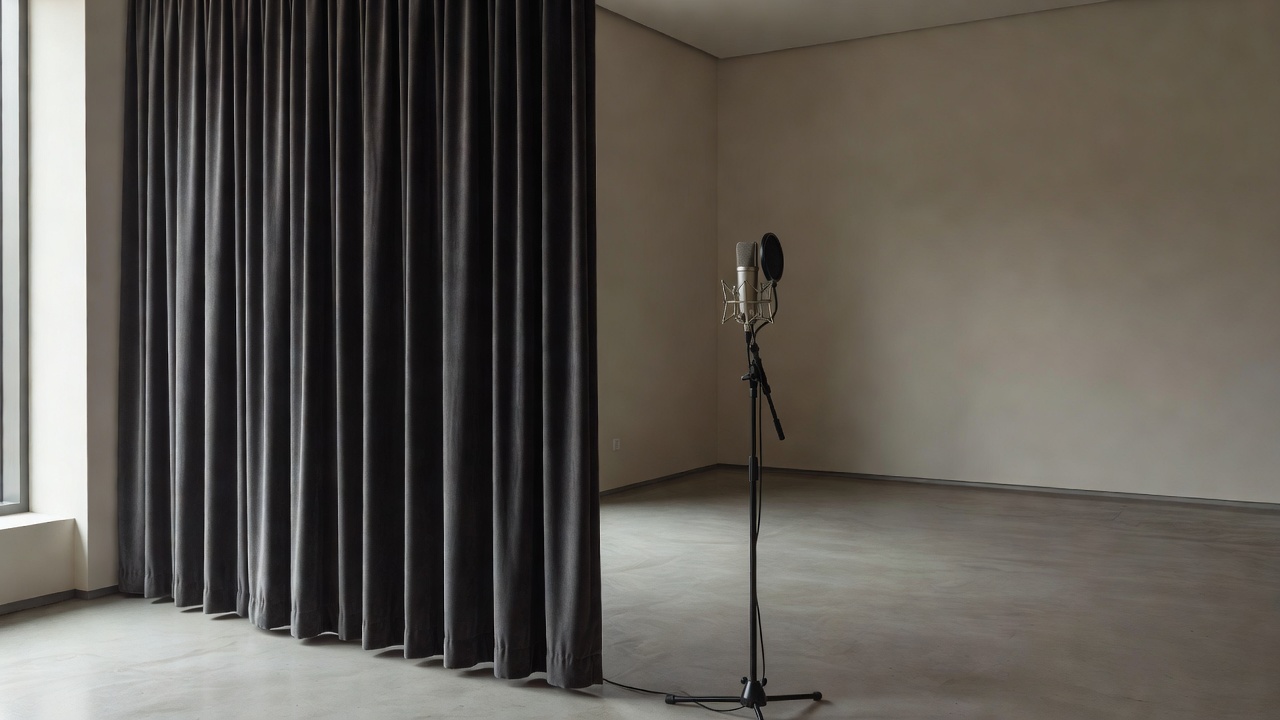
A thick curtain, a washable blanket or an existing upholstered surface can make a useful first experiment. Inspect for dampness, mould, pests, strong odours, loose fibres and damaged seams. Clean it according to its care instructions and let it dry completely before use. Do not bring contaminated fabric into the room to see whether the microphone notices.
Performance depends on fabric construction, area, folds, spacing and frequency. Thin decorative cloth is usually not a substantial absorber by itself. Heavier fabric may soften some mid- and high-frequency reflections, but it will not reliably control deep bass or isolate the room from outside noise. Listen to a repeatable voice sample instead of judging solely by how soft the material feels.
Keep all fabric away from heaters, hot lamps, charging equipment and other heat sources. “Natural,” “recycled” and “heavyweight” are not fire classifications. Never conduct a home flame test or assume a spray treatment makes an unknown assembly suitable for your setting. Follow applicable local rules, especially in shared, rented or public premises.
Free is a price. Safe is a separate question.
Prefer traceable products to mystery salvage
Recycled-content acoustic products and unknown recovered insulation are not interchangeable. Identifiable products may include recycled textile, polyester, cellulose or mineral-based materials, but suitability depends on the particular product and intended installation. Request current technical information, handling instructions and any relevant safety data sheet.
Check whether the product is intended for exposed indoor acoustic use, a covered panel or a sealed building cavity. Those uses are different. Do not repurpose loose-fill building insulation simply because it contains recycled fibres. Binders, dust, additives, moisture history and installation requirements all deserve attention.
Never disturb suspected asbestos-containing material, unidentified old insulation or vermiculite of uncertain origin. Do not cut or vacuum it with household equipment. Leave it undisturbed and contact a qualified local professional. The EPA’s asbestos guidance and the HSE’s asbestos resources explain why identification and controlled handling matter.
Handle and contain materials as specified
For an appropriate fibrous product, follow its instructions for cutting, dust control, personal protection and containment. Do not leave shedding edges exposed in a space used for close breathing and speech. A cover should be selected for the actual product, including any required liner; decorative fabric alone is not a universal dust barrier.
Do not compress an absorber merely to make it fit a thinner frame. Compression and added layers can change acoustic behaviour and may conflict with installation guidance. Adhesives and coatings also need indoor-use information and curing time. Avoid improvised chemical mixtures, unknown upholstery foam and degraded mattress foam.
Read acoustic and fire information separately
Acoustic absorption data can help you compare products when the test conditions are comparable. The ASTM C423 method and ISO 354 describe laboratory absorption measurements. Mounting, thickness and air space affect the result. A single advertised absorption number does not describe every frequency or predict your entire room.
Fire information is a separate subject. ASTM E84, NFPA 701 and EN 13501-1 address different testing or classification contexts; they are not interchangeable labels. Ask which requirement applies locally and whether the evidence covers the finished assembly and installation.
Finally, keep a material record with the product name, source and care instructions. Inspect periodically for dampness, damage and dust. The responsible reuse decision is sometimes to decline a tempting free item and use less material overall. A small amount of suitable treatment in a useful position is preferable to a room full of uncertainty.