A frame has a modest job: hold suitable treatment in a useful position without creating a new hazard. It does not need a roof, a locking door or heavy walls. For many home voice recordings, a single supported panel or a carefully placed curtain is enough to test whether a more permanent arrangement is worthwhile.
Start with the room sketch from your baseline session. Draw the chair, microphone and treatment as separate objects. Make sure the arrangement works when you stand, turn, carry equipment and leave. A layout that looks neat from above can become awkward when a microphone boom reaches across the only clear path.
Let furniture keep its original job
An upholstered chair may soften a nearby reflection. A desk can provide a familiar working position. A clothes rail may hold fabric if its manufacturer’s load limit, attachment method and stability suit that purpose. None of these objects should be assumed to support a heavy acoustic panel merely because it feels sturdy.
Do not turn a bookcase into a load-bearing wall, climb on office furniture to mount treatment, or rely on a wheeled unit that can drift during a take. Follow the furniture manufacturer’s anchoring advice, particularly where children or pets can reach it. Bookshelves may scatter some sound, but an ordinary shelf is not a predictable broadband absorber or a designed acoustic diffuser.
Inspect reclaimed timber before it enters the plan
Look for known provenance, dry condition and a section suitable for the intended load. Reject rot, insect damage, splits at fixing points, protruding metal and uncertain chemical treatment. Pallet markings do not establish that a pallet is clean, uncontaminated or suitable for indoor acoustic furniture; its cargo history matters too.
Old paint deserves particular caution. Do not sand, scrape or cut an unknown coating to “see what is underneath.” Lead and other hazards are not reliably identified by appearance. The US Environmental Protection Agency’s lead guidance and the UK Health and Safety Executive’s woodworking guidance are useful starting points, with local requirements taking precedence.
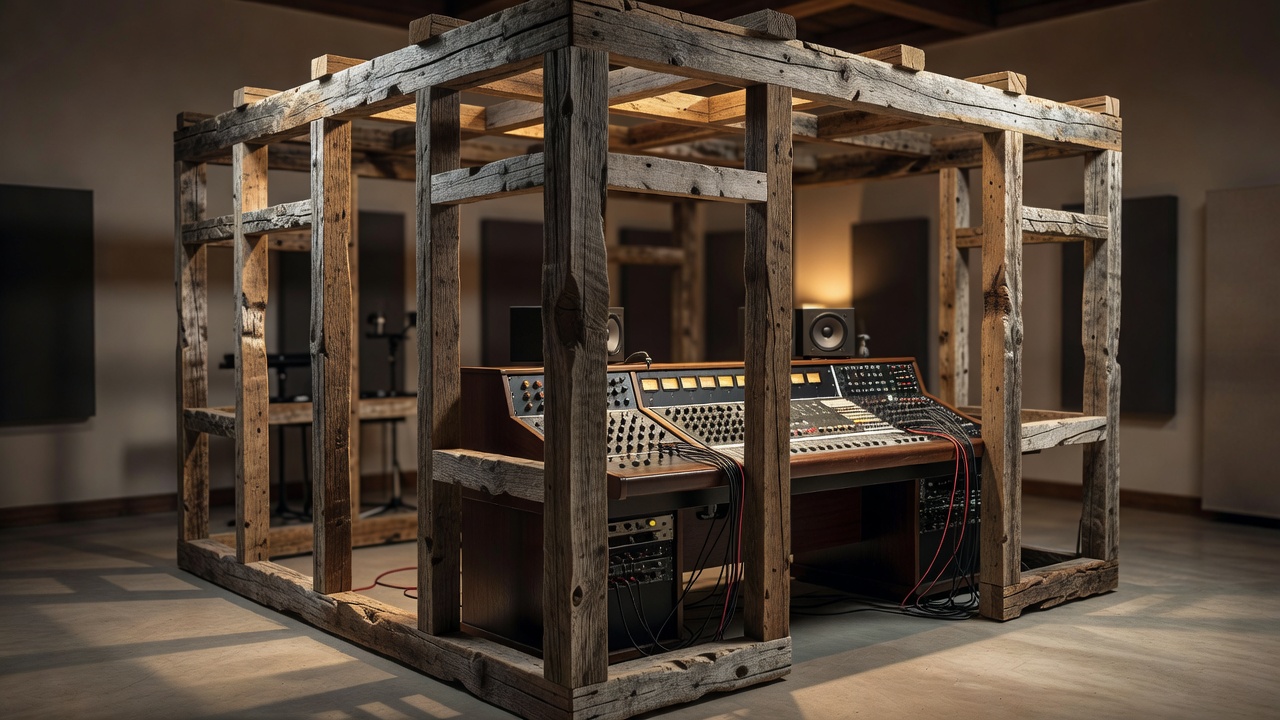
Choose support for the actual load
There is no universal safe cut list for unknown reclaimed wood. A design depends on the material condition, joint construction, panel weight, height, base and forces applied during use. If you cannot assess those factors, choose a commercially rated support or ask a competent maker to review the design.
Keep treatment lightweight where practical and avoid overhead elements. Use fixings appropriate to the timber and load, not miscellaneous screws chosen only because they are available. Check for hidden metal before any permitted cutting. Wear suitable protection, control dust at source and follow tool instructions; never work suspect material in the recording room.
A tall narrow panel can tip even if its joints are strong. Do not use a casual push test as proof of stability, especially near people or equipment. Plan a stable base or properly designed restraint that does not introduce a trip hazard. Obtain permission and suitable advice before attaching anything to a rented wall.
Airflow is not an optional upgrade
Keep room vents and air returns unobstructed. Leave heat-producing equipment uncovered and maintain the clearances specified by its manufacturer. An open-sided layout is preferable to a blanket enclosure, but it still needs the room’s normal ventilation to function.
A nearly enclosed booth changes the problem. Its ventilation must provide adequate fresh air and remove heat while meeting relevant safety requirements. A household fan, a gap under a blanket or an occasional open door is not a ventilation design. If you need a genuinely enclosed space, seek qualified advice on the whole enclosure, including fire safety and escape.
Make the corner easy to undo
Route microphone cables away from feet and chair wheels without obstructing doors. Avoid running fabric over sockets, power supplies or extension leads. Store unused panels where they cannot fall. Check fixings and material condition periodically, not just on the first day.
Photograph the working arrangement and note how to return the room to ordinary use. A corner that can be reset without strain is more likely to stay useful. If the first supported treatment does not improve the recording, move it and retest before adding more structure. The frame is a servant of the listening result, not the project’s main achievement.