A spare bedroom, a dining corner and a small rented flat ask for different compromises. Before choosing materials, decide what “better” means for your work. A narrator may want less room around consonants. A podcaster may need fewer interruptions. A musician may prefer some natural room sound. These are different goals, and none automatically requires a booth.
Write a single target sentence: “I want the spoken voice to sound less hollow at this desk,” for example. A narrow goal makes your next purchase easier to question and your next test easier to interpret.
Make an ordinary baseline
Place the microphone where you can use it comfortably. Record a short passage at your normal level, leaving quiet room sound at both ends. Disable optional effects such as reverb, automatic noise suppression and automatic gain where your equipment permits. Note any processing you cannot disable. Save the original file without normalising it.
Use a repeatable passage with quiet phrases, firm consonants and a natural pause. A few seconds of comfortable speech tell you more about your actual use than shouting into the room. There is no need for loud test tones, a balloon pop or repeated handclaps near your ears.
Write down the microphone, pickup pattern, recording position, input gain, window state and time of day. Mark the chair and stand positions with removable tape if the surface allows it. These modest details stop a changed microphone distance from masquerading as a successful acoustic treatment.
Separate reflections from incoming noise
A reflection is your sound returning from a surface. Several close reflections can make speech seem boxy or blurred; a distinct repeated return can sound like an echo. Incoming noise is a different problem: traffic through a window, plumbing in a wall, or a computer fan beside the desk. Structure-borne vibration can arrive through floors and furniture as well.
First name the problem. Then choose the smallest change that addresses it.
Soft treatment can absorb some energy within the room, particularly at mid and high frequencies depending on its construction. Isolation concerns transmission between spaces. Effective isolation depends on complete assemblies and all the routes around them. The distinction matters because a blanket can make speech drier while doing almost nothing about a passing lorry.
Do not interpret a lower noise reading after hanging fabric as proof of soundproofing. The source outside may simply have become quieter. Proper isolation testing involves controlled methods; the ISO 16240 series concerns laboratory measurement of sound insulation, while the ISO 16233 series concerns engineering methods for field measurement. Informal voice tests are useful, but they are not those tests.
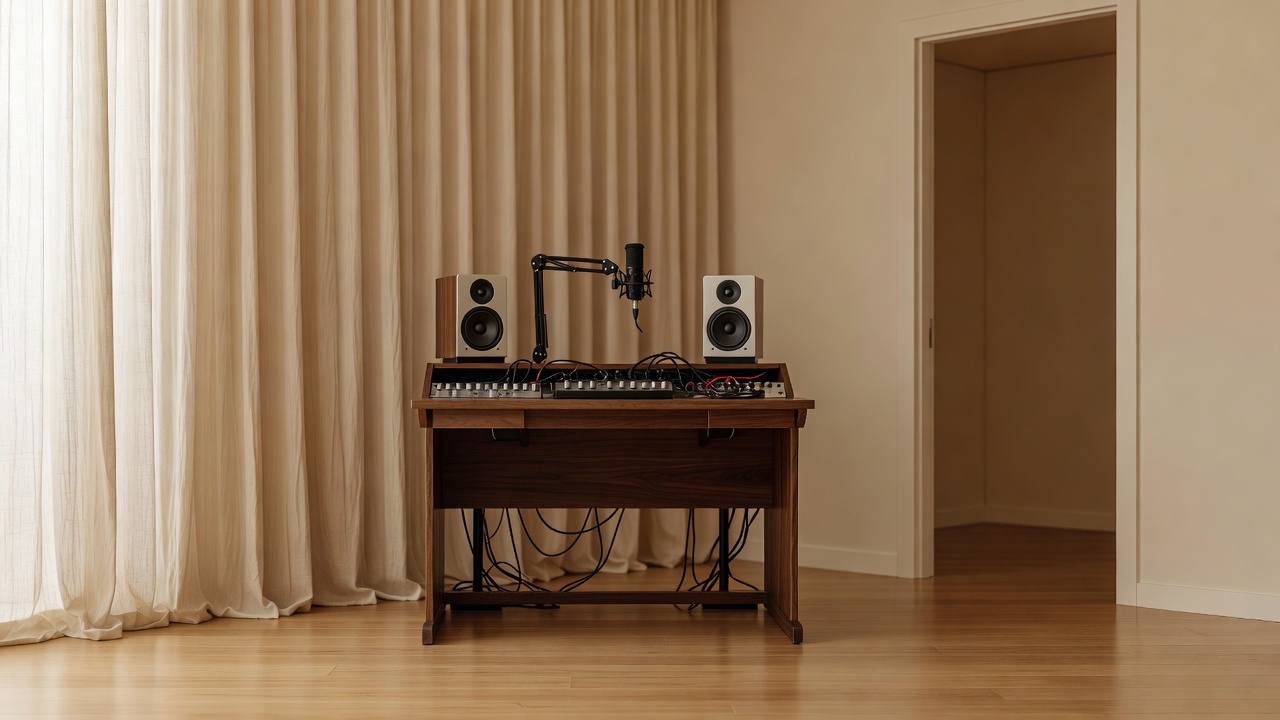
Map the room before changing it
Sketch doors, windows, vents, radiators, sockets and the normal path through the room. Add sources you can control, such as a rattling stand or a laptop fan, and those you cannot, such as road traffic. Listen at more than one time of day. A quieter recording window may be more valuable than another layer of material.
Try two or three feasible positions, not every possible point. Avoid assuming the tightest corner is best: nearby hard boundaries may add strong reflections or uneven bass. Keep the working setup repeatable, with enough space for a relaxed posture and a microphone stand that will not be kicked during a take.
Spend on the bottleneck
If speech is clear but the fan is loud, examine the fan’s placement and the microphone orientation before adding fabric. Do not disable cooling or cover electronics. If the room sounds splashy, test a clean existing curtain or an upholstered area. If low-frequency noise dominates, recognise that thin soft materials are unlikely to solve it.
Set a spending ceiling and keep a small allowance for safe mounting hardware rather than spending everything on the visible fabric. Reuse is economical only when inspection, cleaning and suitable fixings are included. Free material that needs unknown remediation is not necessarily a saving.
Stop and seek competent help when the plan affects building structure, electrical installations, fire protection or suspect materials. The point of listening first is not to postpone making things. It is to build only what your recordings and your room can justify.